AI for manufacturing and industry.
In a plant, information is spread across sensors, work orders, the ERP and people's experience. An agent brings it together and prepares the decision.
Who it is for: Food and beverage, cement and building materials, chemicals, packaging and industrial goods companies.
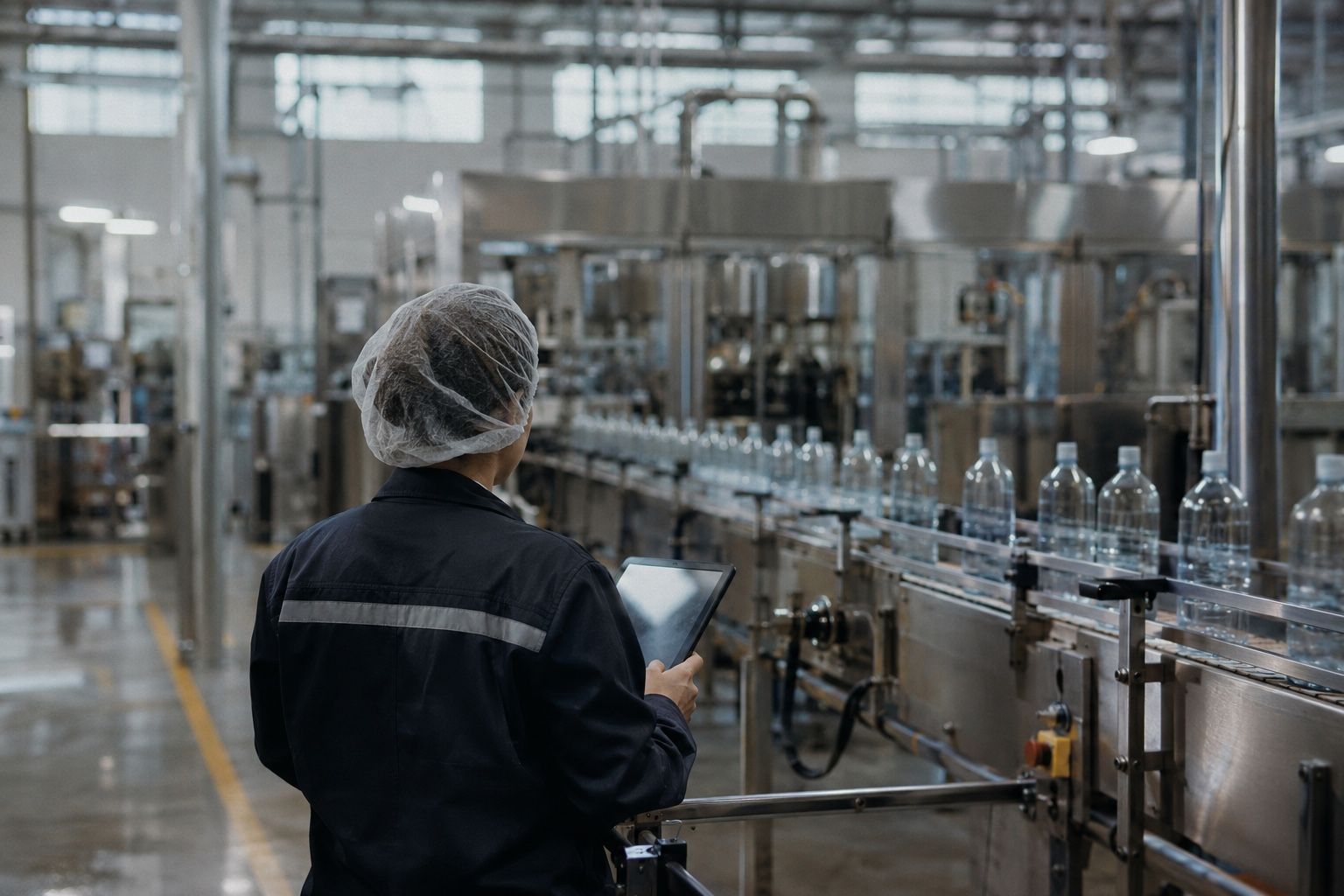
What weighs on operations today.
Three things a project must solve from the design stage, not at the end.
The data exists and nobody looks at it
Readings, work orders and shift reports are kept for years. Gathering them to make a decision takes more time than operations have.
Knowledge sits with a few people
What the planner or the quality manager with twenty years in the plant knows is not written down in any system.
The office holds back the plant
Orders, certificates and files are done by hand. The product is ready and the paperwork is not.
Three processes, drawn with the agent inside.
Who does each step: a person, the agent or a system. Each process has its own page with data, controls and an initial scope.
Predictive maintenance of plant equipment
The agent reviews readings and history, alerts on equipment that drifts from normal and drafts the work order.
- System
Readings and work orders are already in the maintenance system.
- Agent
Reviews readings and failure history and alerts on equipment that drifts from normal.
- Agent
Drafts the work order with spare parts, procedure and a suggested window.
- Person
Confirms priority and date against the production plan.
- Person
Carries out the order and notes what was found on the equipment.
- System
The result goes back into the history and sharpens the next alert.
Illustrative example of a typical process in this industry.
- Unplanned downtime.
- Planning hours per order.
- Rush spare-part orders.
Customer orders
The agent turns an order that arrives by email or WhatsApp into an ERP order and confirms availability.
- System
By email, WhatsApp or portal, in each customer's own format.
- Agent
Enters the order in the ERP and checks item codes, prices and credit limit.
- Agent
Checks inventory and the production schedule, and proposes a delivery date.
- Person
Reviews the exceptions: discounts, exceeded credit limit or doubtful item codes.
- System
The order is in the ERP and the customer receives a confirmation.
Illustrative example of a typical process in this industry.
- Time from order to confirmation.
- Data entry errors per hundred orders.
- Orders handled per person.
Batch quality documentation
The agent gathers the batch records, checks them against the specification and drafts the batch file. Quality reviews and signs.
- System
Production and lab records sit in their systems.
- Agent
Gathers the records, checks them against the specification and flags deviations.
- Person
Production and quality review each deviation and write down their conclusion.
- Agent
Prepares the report or certificate in the required format.
- Person
The quality lead validates the batch file and releases the batch.
- System
The batch file is kept in document control, with its traceability.
Illustrative example of a typical process in this industry.
- Batch release time.
- Deviations caught before review.
- Documentation hours per batch.
Other processes where an agent saves work.
The list does not end here. If your process has volume, documents and a decision at the end, it is a candidate.
Assess a process in three minutes- Production schedulingTalk about this process
- Purchasing and supplier follow-upTalk about this process
- Customer quality complaintsTalk about this process
- Questions about manuals and proceduresTalk about this process
- Industrial safety: reports and investigationsTalk about this process
- Costing and variance analysisTalk about this process
Systems it connects to
- ERP
- Maintenance system
- Production system
- Laboratory system
- Historian, read-only
- Operations spreadsheets
The agent works on top of the systems the company already has. How integration works.
The industry, in numbers.
Public data, each with its source. None of it is a MIMMERS result.
See AI in Colombia, in figures1,329USD million
Manufacturing is the second industry that invests the most in AI in Latin America: USD 1,329 million in 2025.
IDC, Worldwide AI & Generative AI Spending Guide, March 2026
50+USD million
Cementos Argos announced investments of more than USD 50 million in Colombia for 2026, including AI to optimize operating processes and fuel use.
424COP trillion
The manufacturing companies in the report on Colombia's 10,000 largest companies had combined revenue of COP 424 trillion in 2025.
Portafolio, with data from the Superintendencia de Sociedades, June 2026
What we safeguard in every project.
The industry's conditions become design decisions.
The plant does not stop
The agent starts by making recommendations, alongside the current process. It only carries out steps when operations approve them.
It connects to what is already there
The ERP, the maintenance system and the spreadsheets that run operations today remain the source of the data.
Your technical knowledge stays yours
Formulas, specifications and procedures stay inside. When needed, the model runs on the company's infrastructure.
Other industries
Banking and insurance
- Review a loan
- Handle a claim
- Collect overdue debt
Retail and consumer goods
- Restock stores
- Help a customer
- Reconcile suppliers
Healthcare and pharma
- Submit medical bills
- Report adverse events
- Confirm appointments
Energy and utilities
- Analyze a failure
- Recover losses
- Answer complaints